Cult of Sea

Maritime Knowledge base

  • Home
  • Knowledge base
    • Bridge Equipment
    • Cargo Work
    • Deck
    • General
    • Gmdss
    • Maritime Law
    • Marpol
    • MLC 2006
    • Meteorology
    • Navigation
    • Safety
    • Security
    • Ship Construction
    • Ship Handling
    • Ship Stability
    • Shippie’s Escape
    • Surveys
    • Tankers
  • Colreg’s (ROR)
    • Index (Colreg’s)
    • Part A- General
      • Rule 1 – Application
      • Rule 2 – Responsibility
      • Rule 3 – General Definitions
    • Part B- Steering and Sailing
      • Section 1 (Rule 4 -10)
        • Rule 4 – Application
        • Rule 5 – Lookout
        • Rule 6 – Safe Speed
        • Rule 7 – Risk of collision
        • Rule 8 – Action to avoid collision
        • Rule 9 – Narrow Channels
        • Rule 10 – Traffic separation schemes
      • Section 2 (Rule 11 – 18)
        • Rule 11 – Application
        • Rule 12 – Sailing vessels
        • Rule13 – Overtaking
        • Rule 14 – Head on situation
        • Rule 15 – Crossing situation
        • Rule 16 – Action by give-way vessel
        • Rule 17 – Action by stand-on vessel
        • Rule 18 – Responsibilities between vessels
      • Section 3 (Rule 19)
        • Rule 19 – Conduct of vessels in restricted visibility
    • Part C- Lights and Shapes
      • Rule 20 – Application
      • Rule 21- Definitions
      • Rule 22 – Visibility of lights
      • Rule 23 – Power-driven vessels underway
      • Rule 24 – Towing and pushing
      • Rule 25 – Sailing vessels underway and vessels under oars
      • Rule 26 – Fishing vessels
      • Rule 27 – Vessels N.U.C or R.A.M
      • Rule 28 – Vessels constrained by their draught
      • Rule 29 – Pilot vessels
      • Rule 30 – Anchored vessels and vessels aground
      • Rule 31 – Seaplanes
    • Part D- Sound and Light Signals
      • Rule 32 – Definitions
      • Rule 33 – Equipment for sound signals
      • Rule 34 – Manoeuvring and warning signals
      • Rule 35 – Sound signals in restricted visibility
      • Rule 36 : Signals to attract attention
      • Rule 37 – Distress signals
    • Part E- Exemptions (Rule 38)
      • Rule 38 – Exemptions
    • Part F – Verification of compliance with the provisions of the Convention
      • Rule 39 – Definitions
      • Rule 40 – Application
      • Rule 41 – Verification of compliance
    • Annexes
      • Annex 1 – Positioning and technical details of lights and shapes
      • ANNEX II – Additional Signals for Fishing Vessels Fishing in Close Proximity
      • ANNEX III – Technical Details of Sound Signal Appliances
      • ANNEX IV – Distress Signals
  • Glossary
  • Contact

Inert Gas on board Tankers – All you need to know!

Inert gas

General Hydrocarbon gas normally encountered in petroleum tankers cannot burn in an atmosphere containing less than approximately 11% oxygen by volume. One way to provide protection against fire or explosion in the vapour space of cargo tanks is to keep the oxygen level below that figure. This is usually achieved by using a fixed piping arrangement to blow inert gas into each cargo tank in order to reduce the air content, and oxygen content and render the tank atmosphere non-flammable. Sources of Inert Gas Possible sources of IG on tankers and combination carriers are:Uptake gas from … [Read more...]

By Miljan Filed Under: Tankers Tagged With: dilution, displacement, gas free, ig, igs, igs requirement, inert gas, Inert gas system, purging, pv breaker, tankers

OIL TANKER OPERATIONS (Discharging) – Conventional Tanker Basics
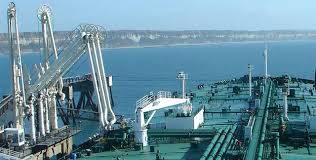
OIL TANKER OPERATIONS (Discharging) Good planning is the hallmark of efficient tanker operations.Prior arriving at the discharge port an exchange of information between the ship and the terminal will take place. Once the vessel is tied up at the terminal, a ship-shore checklist will have to be filled out. The general safety checks and precautions will be the same as given for the loadport. Since pumps will be running at the discharge port, special attention will have to be given to monitor the safe running of the pumps. Pumproom ventilation should be running throughout operations. Proper … [Read more...]

By Capt. Angad S Cheema Filed Under: Tankers Tagged With: cow, crude oil washing, discharging, ig, oil tanker, operations, purging, stripping, tankers, venting

mariner-gps
Sail Time
Simple Colregs COS Ad

Join Our List

Subscribe to our mailing list and get interesting stuff and updates to your email inbox.

Powered with ♥ by Cult of Sea

instagram-button

What others are reading

Part C Lights and Shapes

Rule 27 – Vessels not under command or restricted in their ability to manoeuvre

Rule 19 – Conduct of vessels in restricted visibility

Discharge of sewage

Note of Protest vs Letter of Protest

Note of Protest vs Letter of Protest – Why, When and Differences between NOP & LOP

Leave

Entitlement to leave – MLC 2006

Part D - Sound and Light Signals

Rule 35 – Sound signals in restricted visibility

Notice of Readiness cover

Notice of Readiness (NOR) – Definition, Contents & Requirements

Hot work on ships

Hot Work – Definition, Responsibility, Process and Risks On-board Ships

I haven’t been everywhere, but it’s on my list

Revised High Risk Area – BMP4 effective 1 December 2015

Single Point Mooring Operation

SPM (Single Point Mooring) or SBM Operations

The Pivot Point

Flammability

FLAMMABILITY COMPOSITION DIAGRAM

Vessel Size Groups

Regulation 15

Control of operational discharge of oil (Machinery Spaces)


About Us | Terms | Contact Us | Sitemap | Marine Glossary (BETA)

Cult of Sea®™ · Made with ❤ by a small band of sailors